
Drone delivery and emergency eVTOL
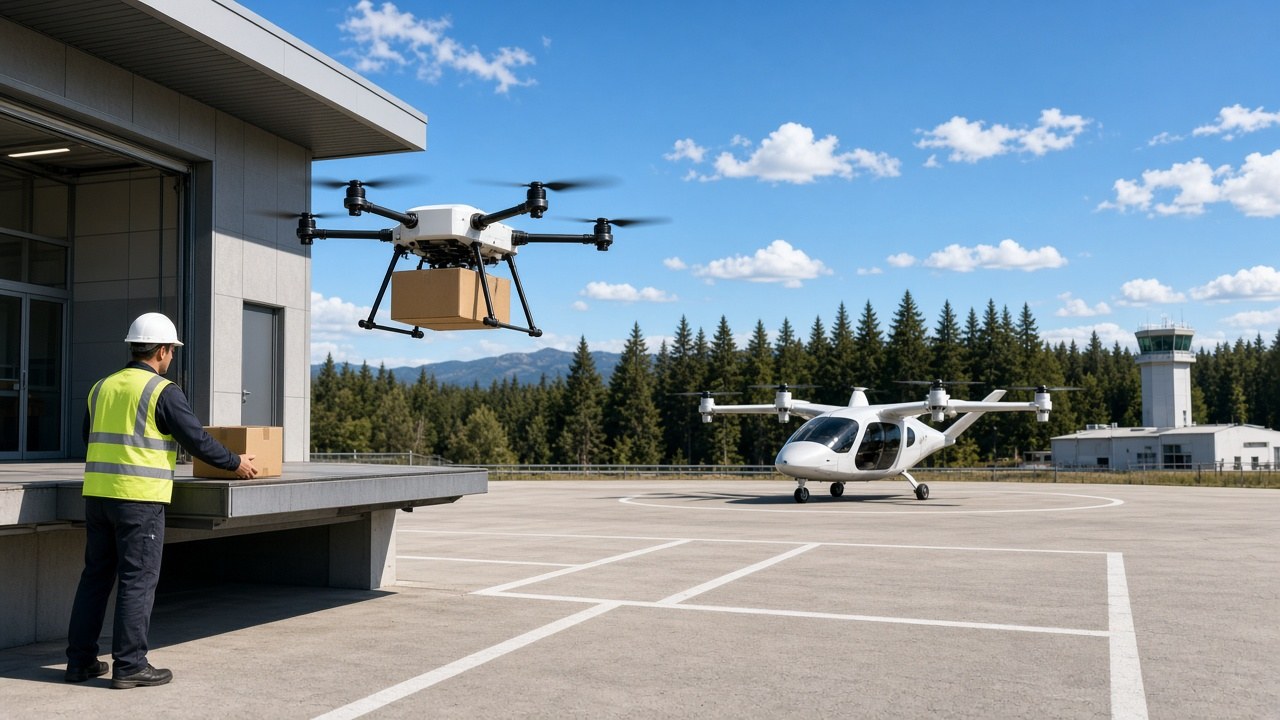
The same compact vertiport at an existing airport could serve drone delivery operators, starting with medical and parcel, and eVTOL for emergency services. Amagi builds the ground network; certified operators and pilots fly.
Emergency, medical and community service
Emergency eVTOL is a core focus: vertiports at existing airports could support public-service missions, especially for island and rural communities where the road or ferry trip is long.
- Emergency response from a pad that is already on airport property
- Medical transport between communities and regional care
- Disaster response when roads or ferries are disrupted
- Community service flights for supplies and outreach
Any such flights would be operated by public agencies or medical providers under their own approvals. Amagi’s role is the ground infrastructure: the landing pad, charging and a quick-response stall kept ready at the port.
Concept Not scheduled
A ground hub for delivery drones
Amagi vertiports are designed with dedicated drone infrastructure, built to host drone delivery operators, such as companies like Zipline, flying medical supplies and small parcels.
Amagi has no partnership or agreement with Zipline; named for illustration only.
- Launch, landing and docking area kept separate from the passenger eVTOL pad
- Charging and battery swap to turn drones around between flights
- Secure parcel handoff and loading for medical and package shipments
- Staging space for operator crews and equipment
- Room for remote operations: fleet monitoring and dispatch coordination for drone delivery management
What it could carry:
- Medical deliveries such as supplies, prescriptions and lab samples
- Small parcels for local businesses and residents
- Island and rural deliveries where ferries and long roads slow things down
The design target is 50–100 drone flights per day per site. Operators would fly under their own FAA approvals (for example, Part 135 certification and BVLOS waivers or rules, as applicable); Amagi provides the ground hub.
Design target No operators lined up
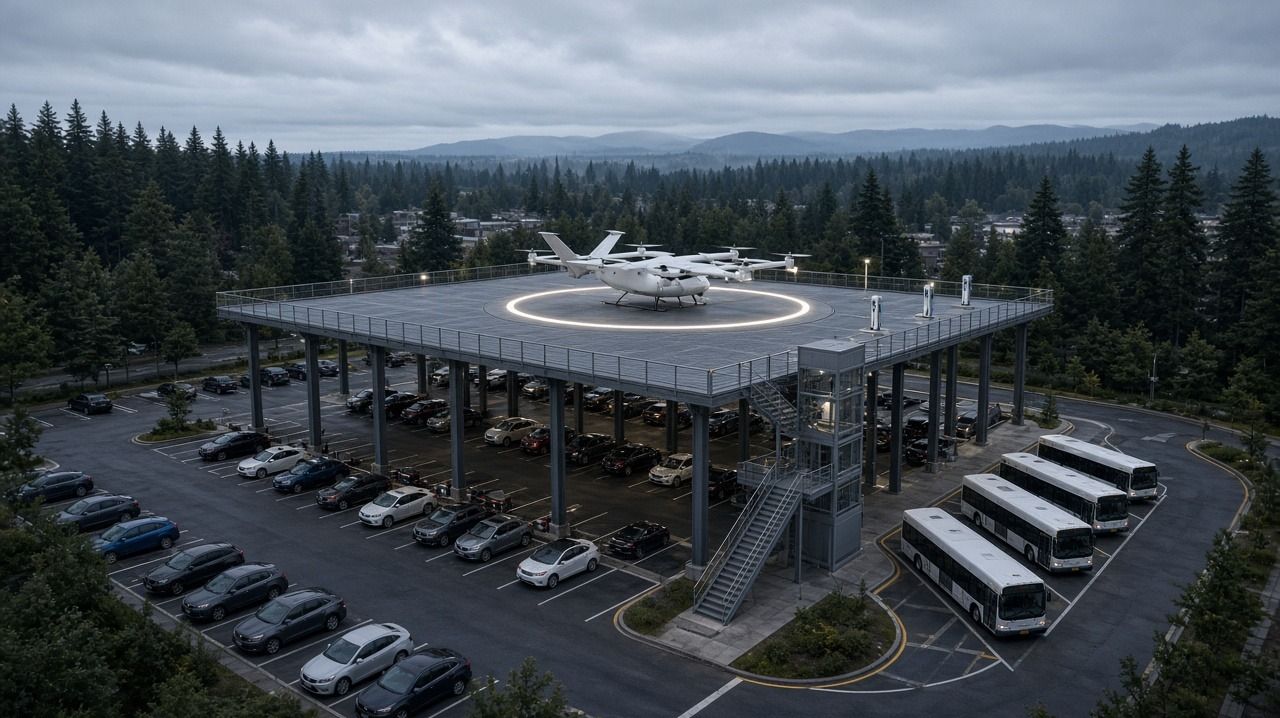
Vertiport decks over park-and-ride lots
A design concept we are exploring: steel vertiport decks built over existing park-and-ride lots. A deck could connect drone delivery and emergency eVTOL with transit without needing new land, while parking stays in place underneath.
Design concept
How traffic is managed
Amagi vertiports would share pad availability, charging status and slot schedules with a traffic management platform, so drones, emergency flights and other operators can be sequenced safely in and out of the same site.
Amagi vertiports are designed to integrate with traffic management providers such as ANRA Technologies, whose platforms help operators plan, deconflict and monitor flights in shared airspace.
Amagi has no partnership or agreement with ANRA; named for illustration only.

What the vertiport shares
- Pad availability, so arrivals and departures can be slotted around each other
- Charging status, so an aircraft lands when a charger is ready
- Slot schedules for the eVTOL pad and the drone delivery area
Who does what
- Operators file flight plans and request slots; emergency and medical flights can be given priority
- The traffic management platform sequences and deconflicts eVTOL and drones
- Amagi provides the ground infrastructure and its live status
Operators and traffic management providers would work within FAA rules and approvals, as applicable. This section describes a design intent; no integrations, agreements or approvals are in place.
One ground network serving all of them
We build and operate the vertiports: a standard pad, chargers, boarding stalls, a terminal and a dedicated drone delivery area at existing airports. Public agencies, commercial operators, drone delivery operators and, later, private pilots would bring the aircraft.
Use cases on this page are illustrative concepts. Any service depends on aircraft certification, regulations, operator partners and funding. No agreements, partnerships, approvals or dates are implied.
Help build the network
Airports, operators, public agencies and investors: see where Amagi fits.