
One compact design, built to repeat
A single, scalable layout for delivery drones and emergency eVTOL, sized for existing airport footprints.
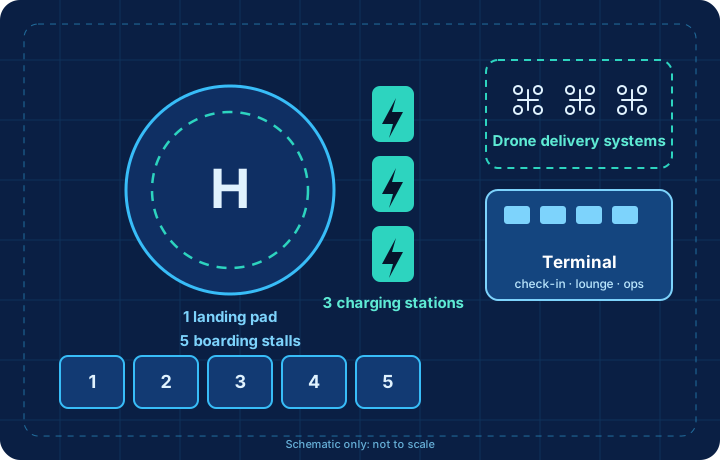
Core components
- Terminal for passenger check-in, waiting and operations
- Drone delivery systems for parcel loading and dispatch
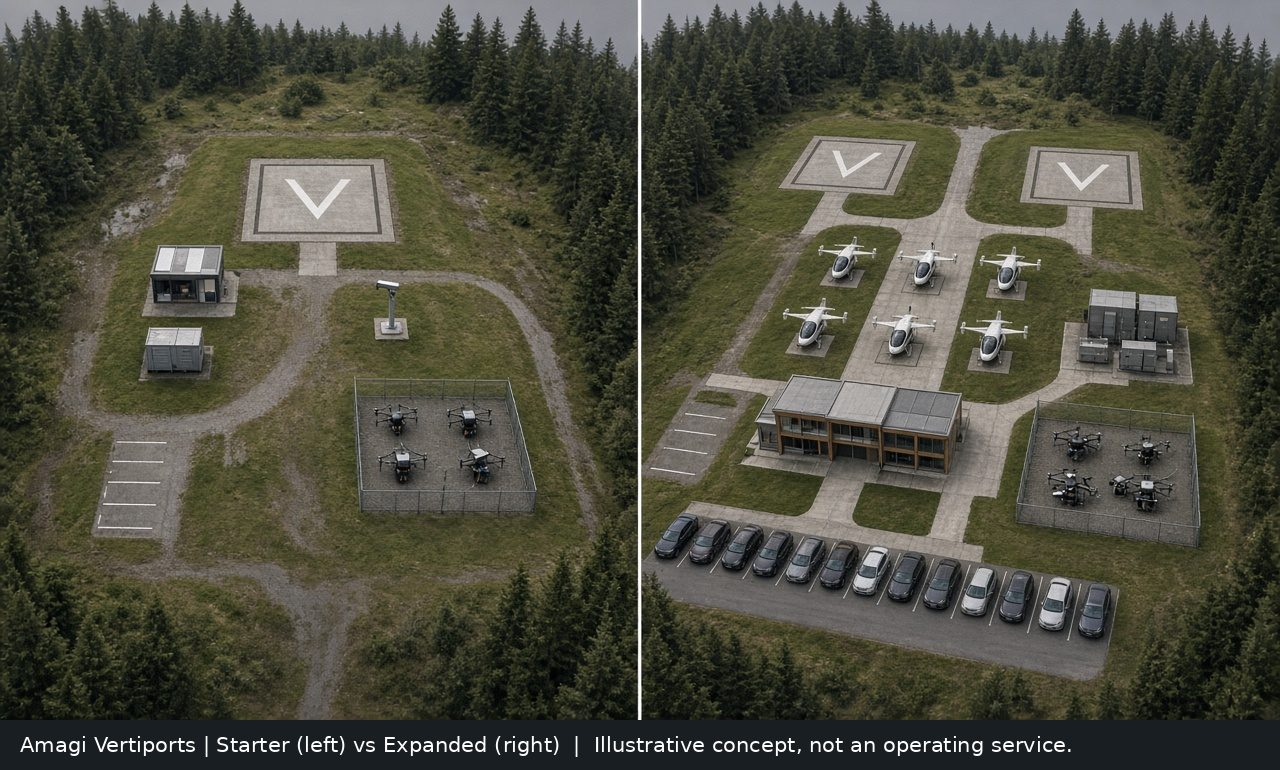
- Scalable: the design is intended to grow with demand
- Designed to FAA Engineering Brief 105A criteria, adapted to each site
Schematic for illustration. Dimensions and layouts are adapted to each airport.
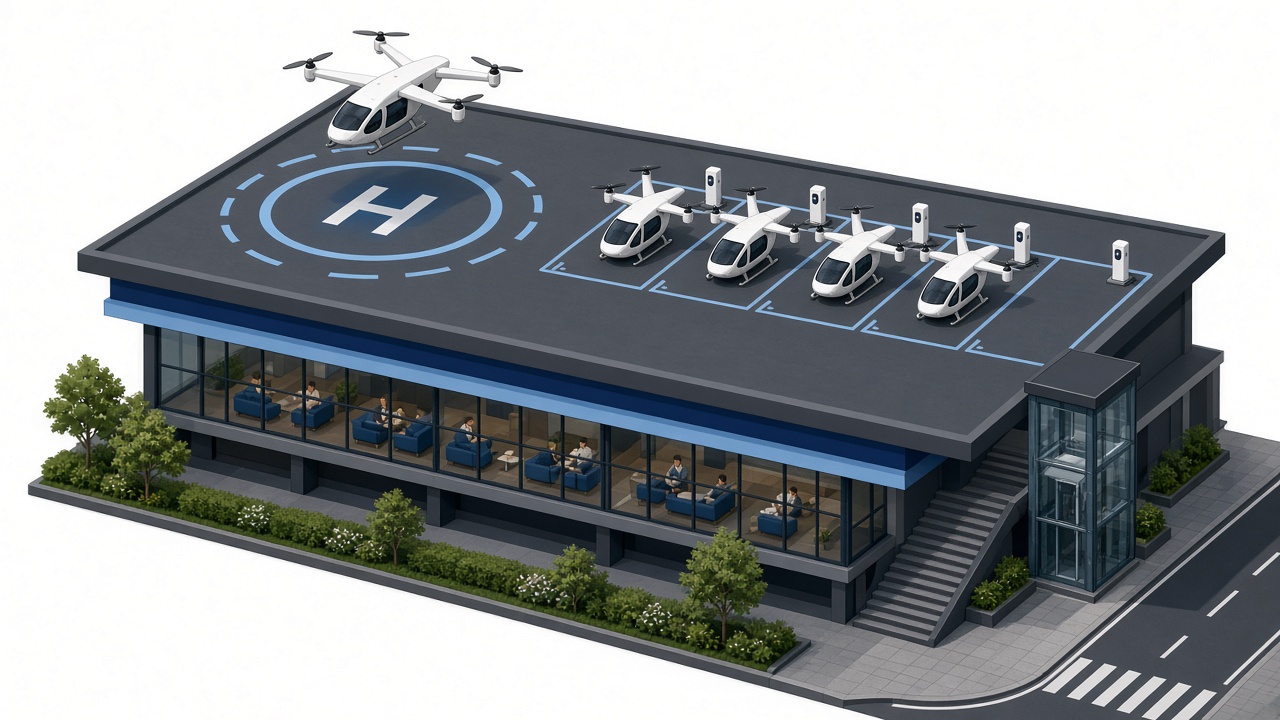
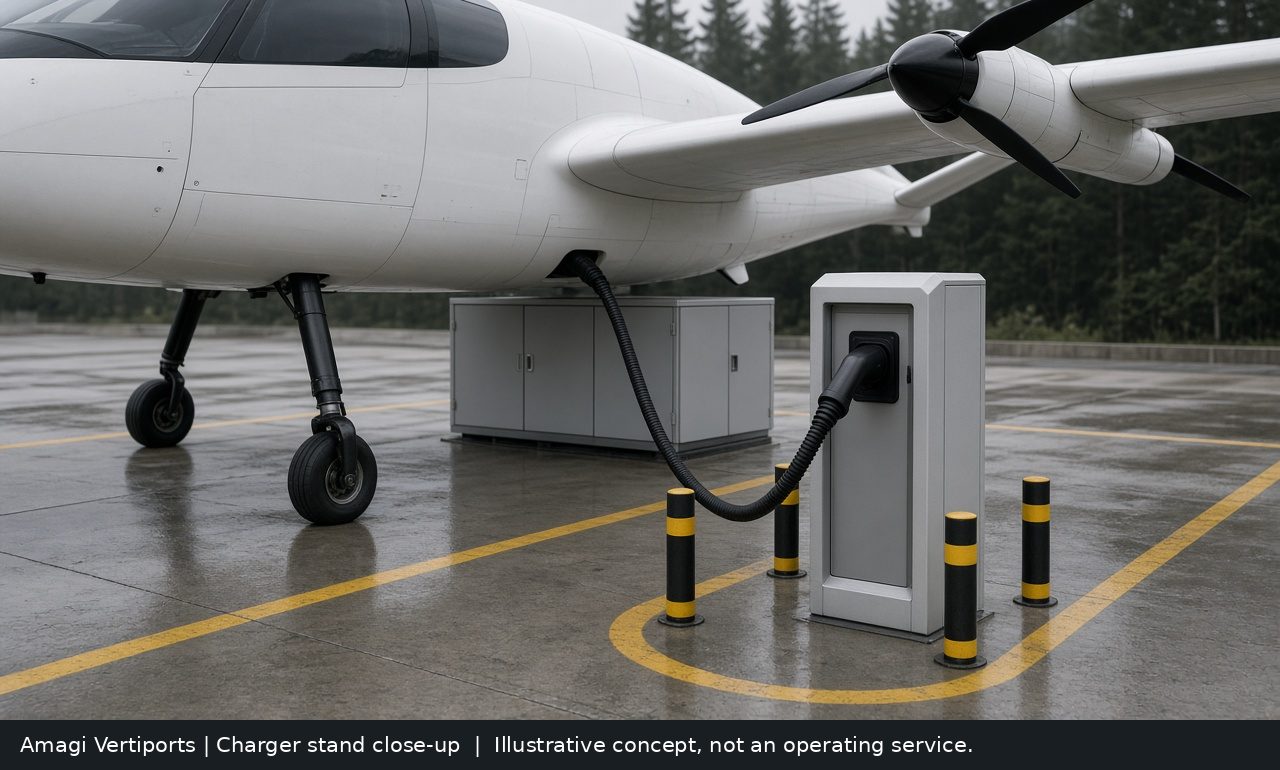
Concept rendering: urban deck
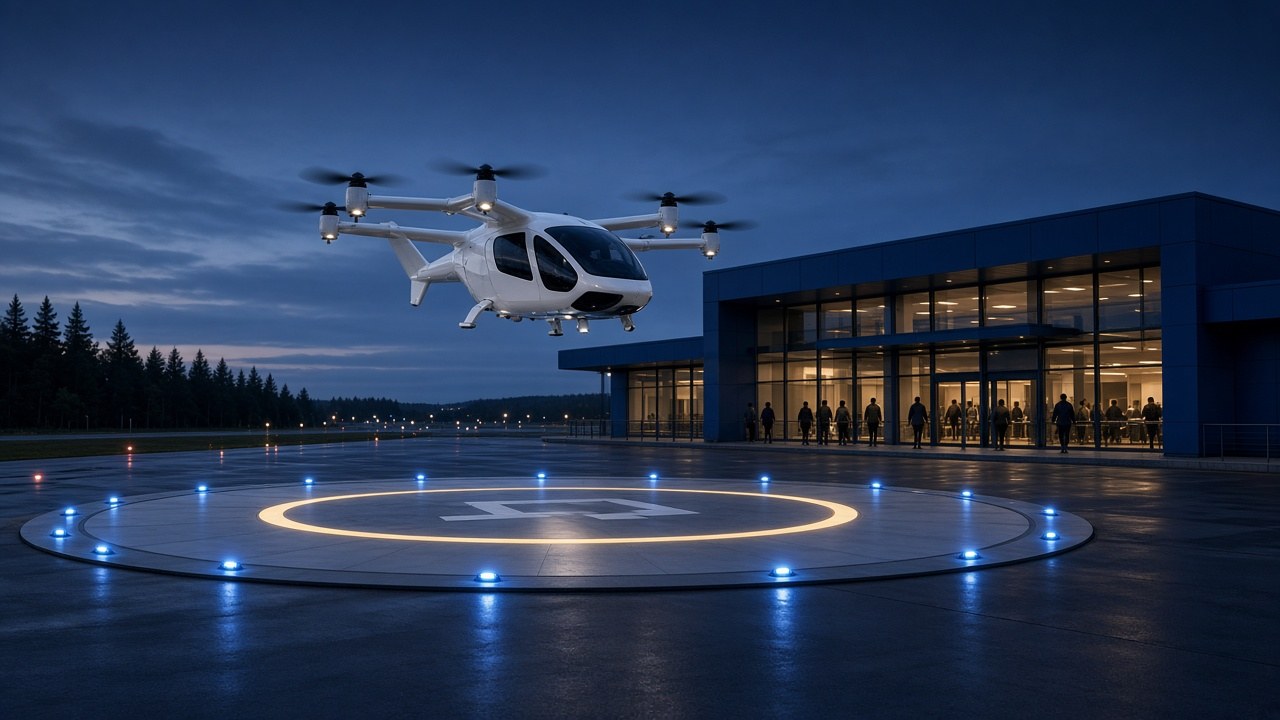
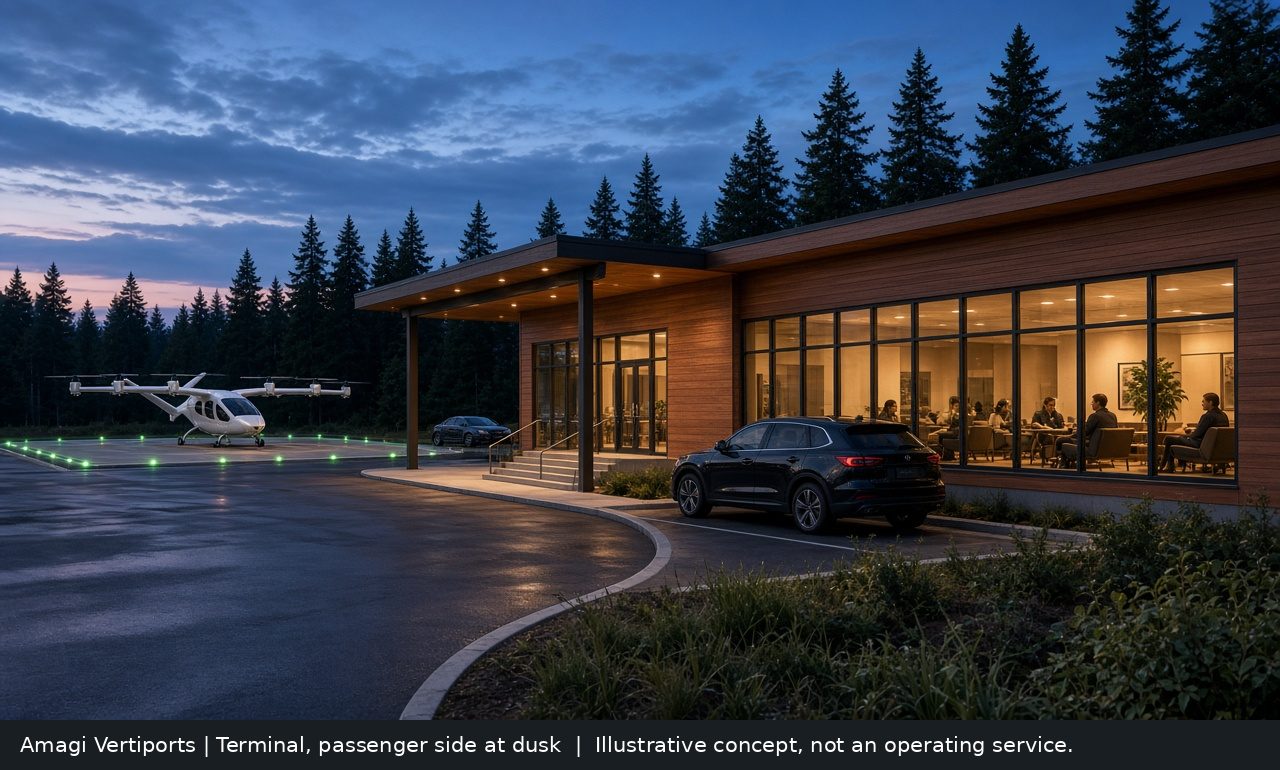
Concept rendering: dusk operations
An illustration of an eVTOL landing at a vertiport after sunset, with the pad lit and the terminal open.
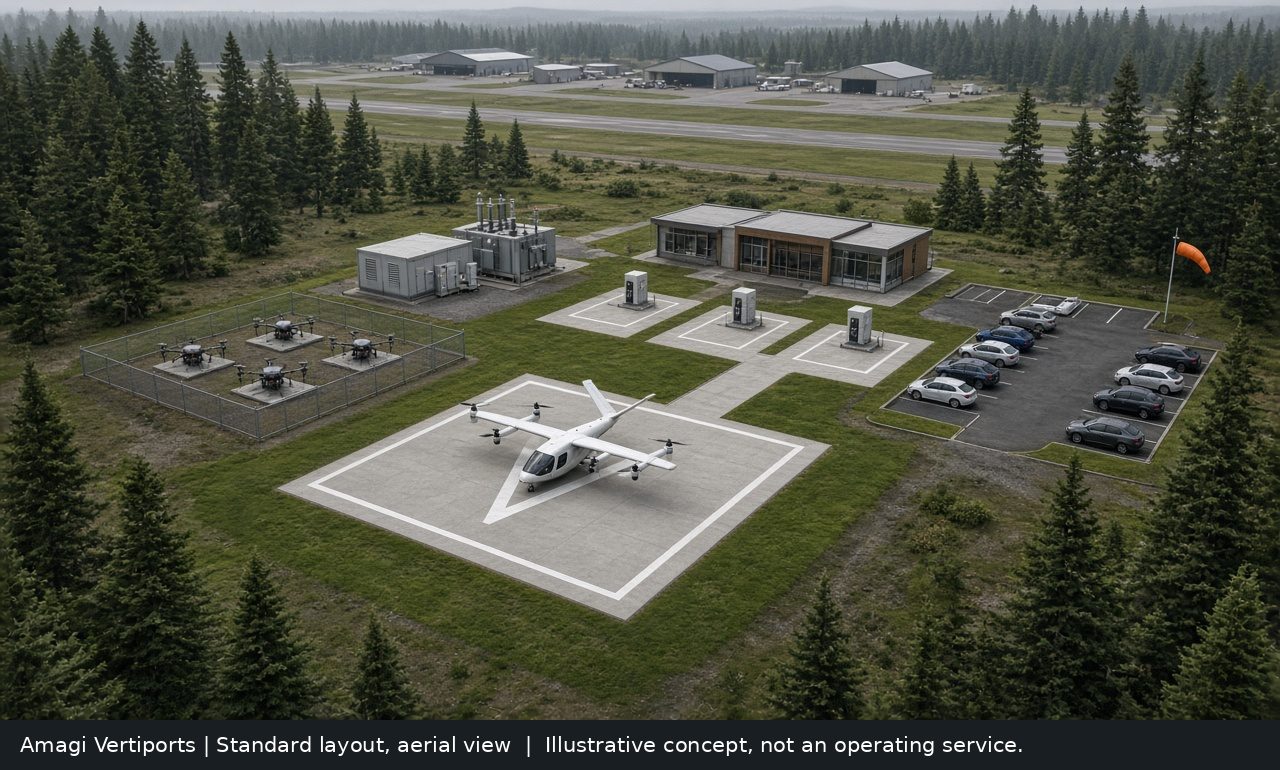
Concept renders: the modular vertiport
Early visual studies of the standardized layout. Designs are adapted to each airport and remain subject to professional design review and approvals.
Designed throughput per site
| Mode | Design target per site |
|---|---|
| Emergency eVTOL (design target) | Approximately 20 daily round trips |
| Drone delivery | 50–100 daily flights |
Drone delivery
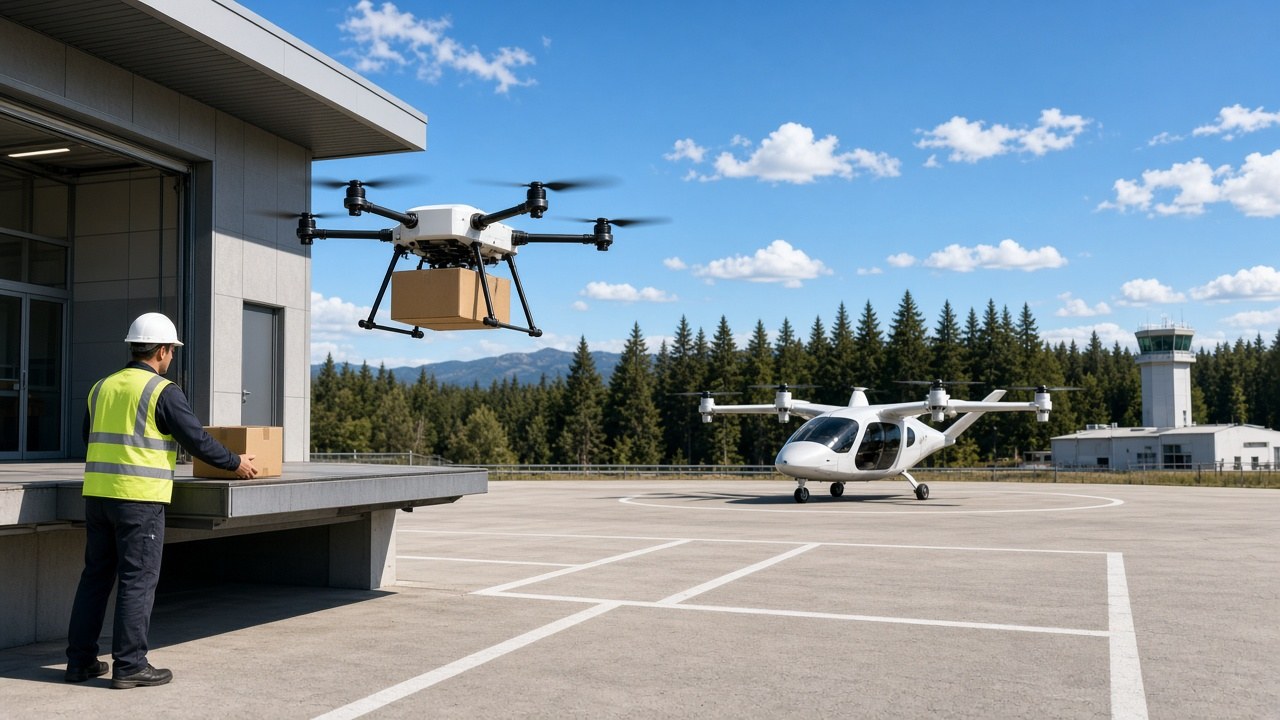
Each standard vertiport includes drone delivery systems for parcel loading and dispatch, alongside the eVTOL pad. The design target is 50–100 daily drone flights per site.
This is a design target, not an operating result. No delivery operators, agreements or service dates are implied.
Benefits of a repeatable design
Existing airports
Siting at existing airports lets us build on existing aviation use and established airport zoning, which can help reduce regulatory cost and complexity.
Modular & repeatable
A common layout is intended to simplify planning, procurement and construction from site to site.
Electric-first
Built around electric charging for electric aircraft and drones.
Digital operations
Each site is designed to share pad availability, charging status and slot schedules with an airspace traffic management platform, so flights can be sequenced safely. How traffic is managed
Want the design in detail?
Airport managers, operators and investors can request more information.